How AgentVine Works
AgentVine connects the right offer to the right moment, inside agent reasoning.
-
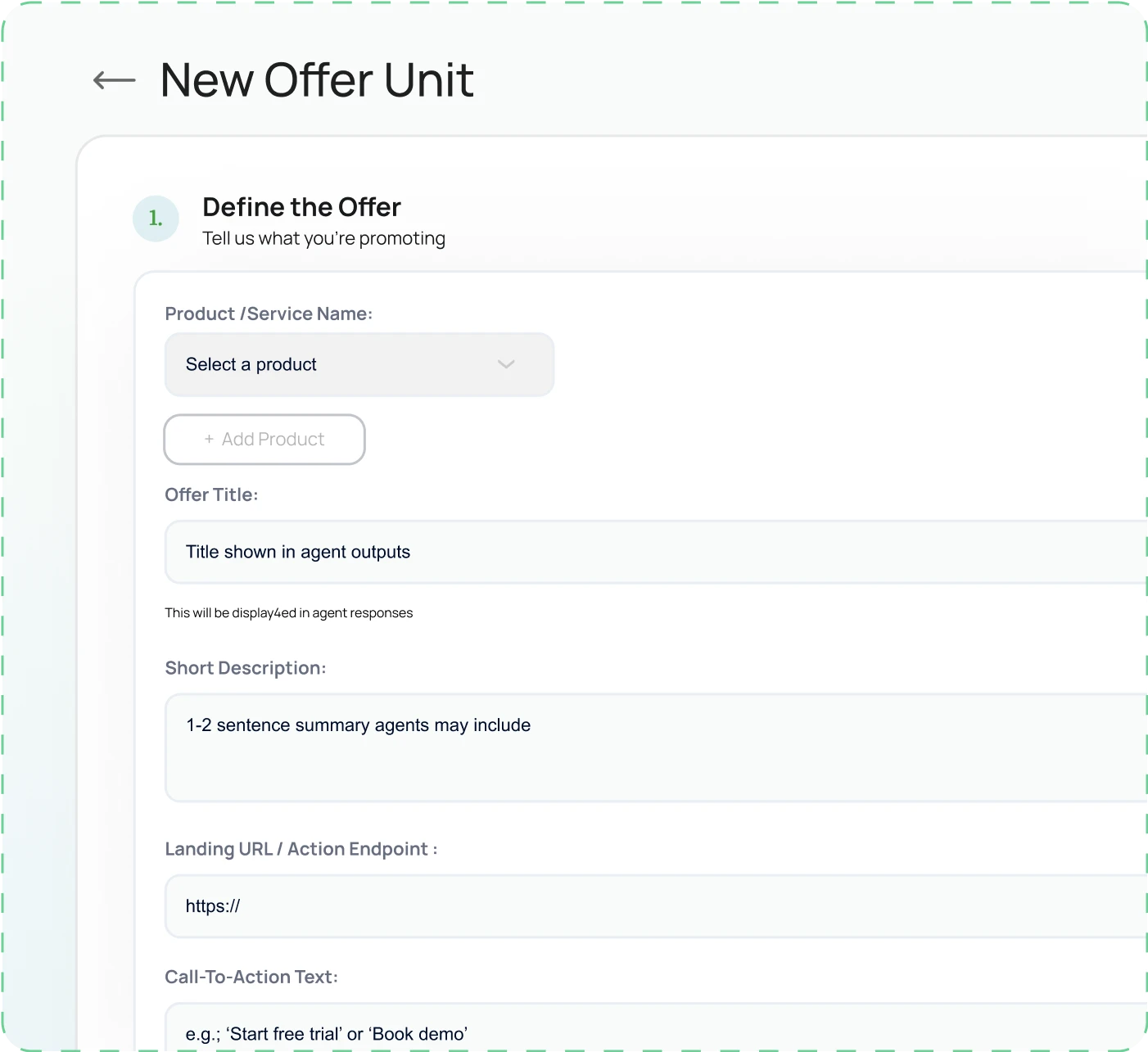
Advertisers Create Offer Units
Companies that want their product recommended by agents create Offer Units.
Advertisers create Offer Units, specifying:
- Target intent (e.g. onboarding, hiring)
- Audience segment or region filters
- Payout terms (CPC or CPA)
- Optional phrasing for agent output
These Offer Units are submitted to the AgentVine Exchange, where they wait to be matched by agent queries in real time.
AgentVine will match the offer when it's relevant to an agent's logic.
-
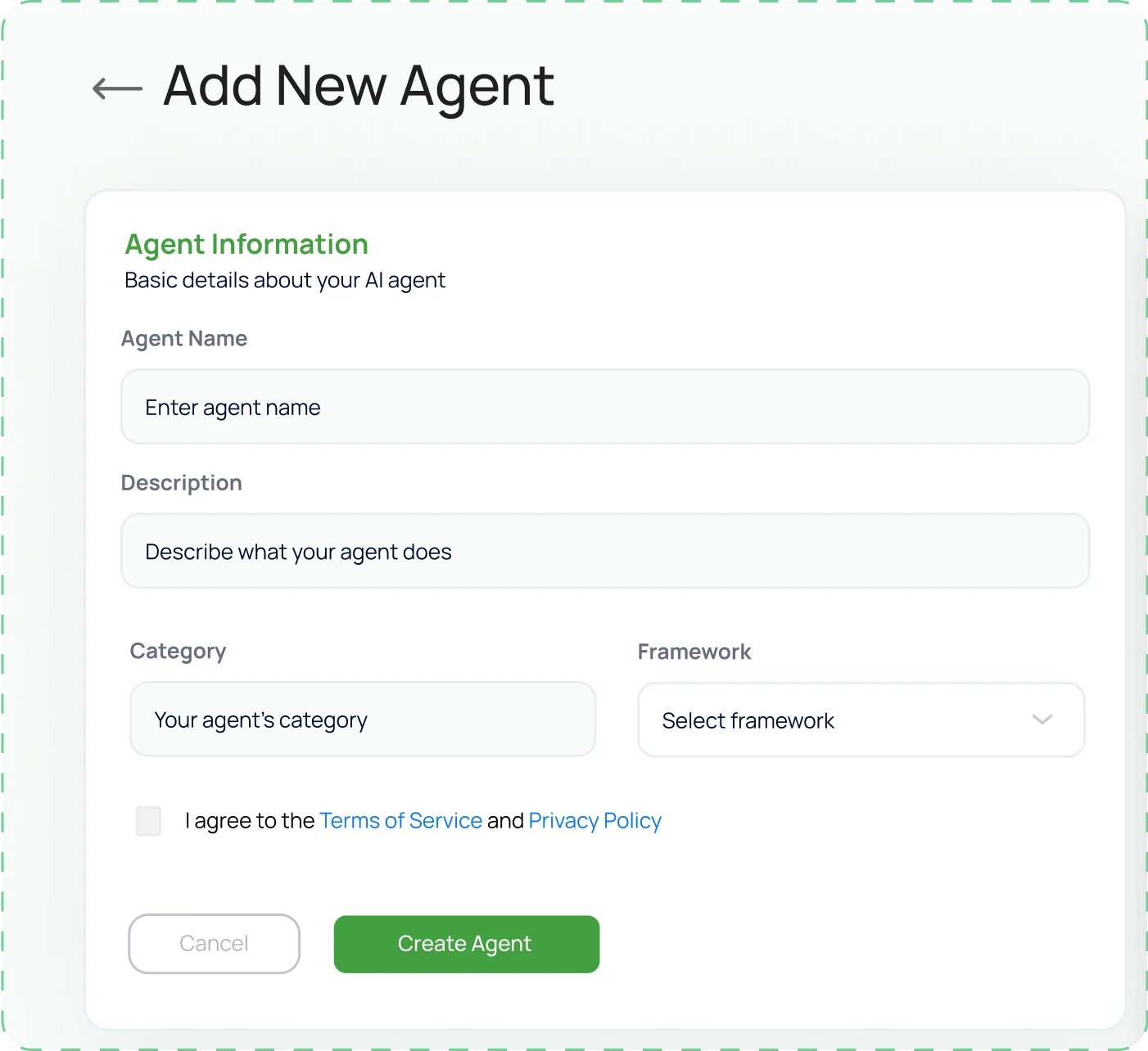
Developers Integrate the AgentVine SDK
Developers connect their agent apps to the network and decide when offers should be allowed into the flow.
With the AgentVine SDK installed, developers control:
- When agents can query for offers
- Which categories are permitted
- Phrasing and disclosure rules
- Filtering logic based on use case or agent role
The SDK doesn't interfere—it provides monetization hooks inside agent behavior.
The Agent is now permissioned to present offers at appropriate moments.
-
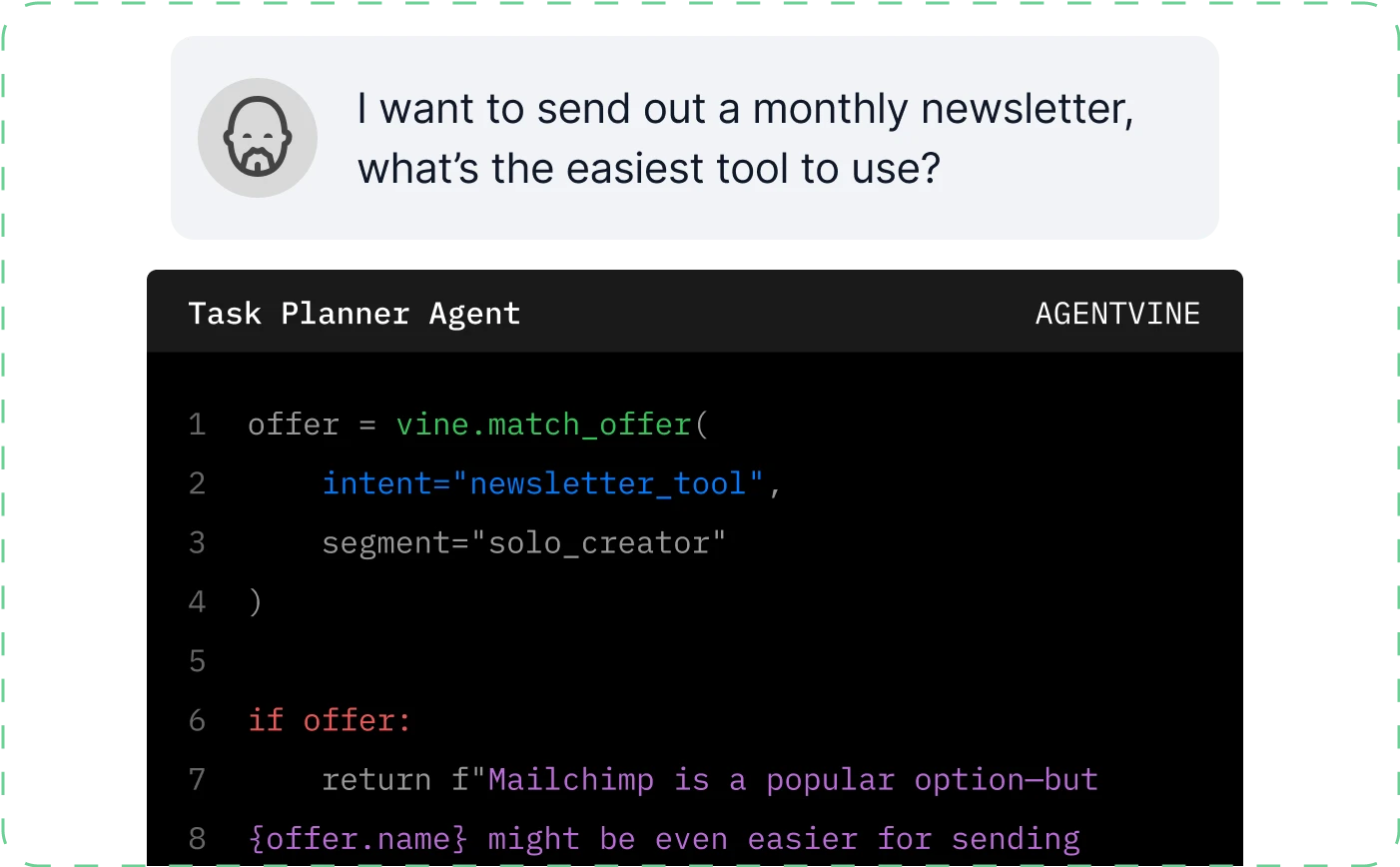
The Agent Queries AgentVine When User Intent Matches
When a task calls for a choice, like picking a tool, agents ask AgentVine for relevant options.
When an agent encounters a decision point, it:
- Identifies the user's intent
- Sends a request to AgentVine
- Receives only the offers that are relevant and allowed
This happens in real time—within the reasoning process, not around it.
The agent considers sponsored options in real time.
-
Agents Evaluate Offers and Respond
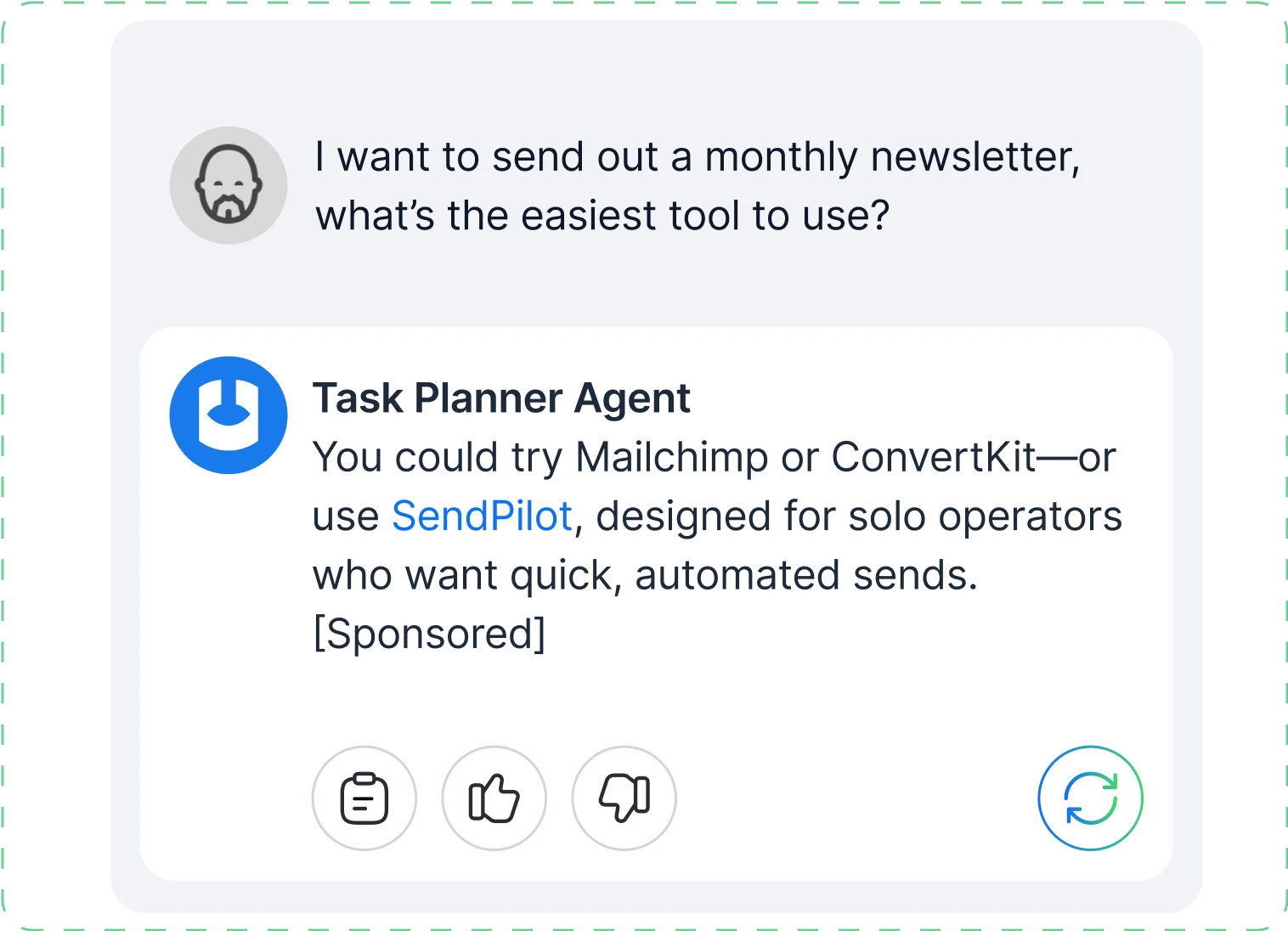
Agents decide whether the offer fits the situation. If it does, it's included naturally, as part of their output.
The offer is:
- Evaluated like any other decision option
- Compared to non-sponsored alternatives
- Included only if relevant and permitted
- Clearly marked as [Sponsored] in user-facing text
Users see thoughtful, timely suggestions—not sales.
The user is presented a trusted recommendation.
-
User Acts, Value Flows
When users engage with a suggestion, advertisers pay and developers earn.
AgentVine handles:
- Click + conversion tracking
- Attribution and payout
- Dashboards for both sides of the network
This creates a clean, efficient revenue model that fits how agents actually work, monetizing decisions, not display space.
Everyone wins with a monetization model that rewards relevance, not reach.
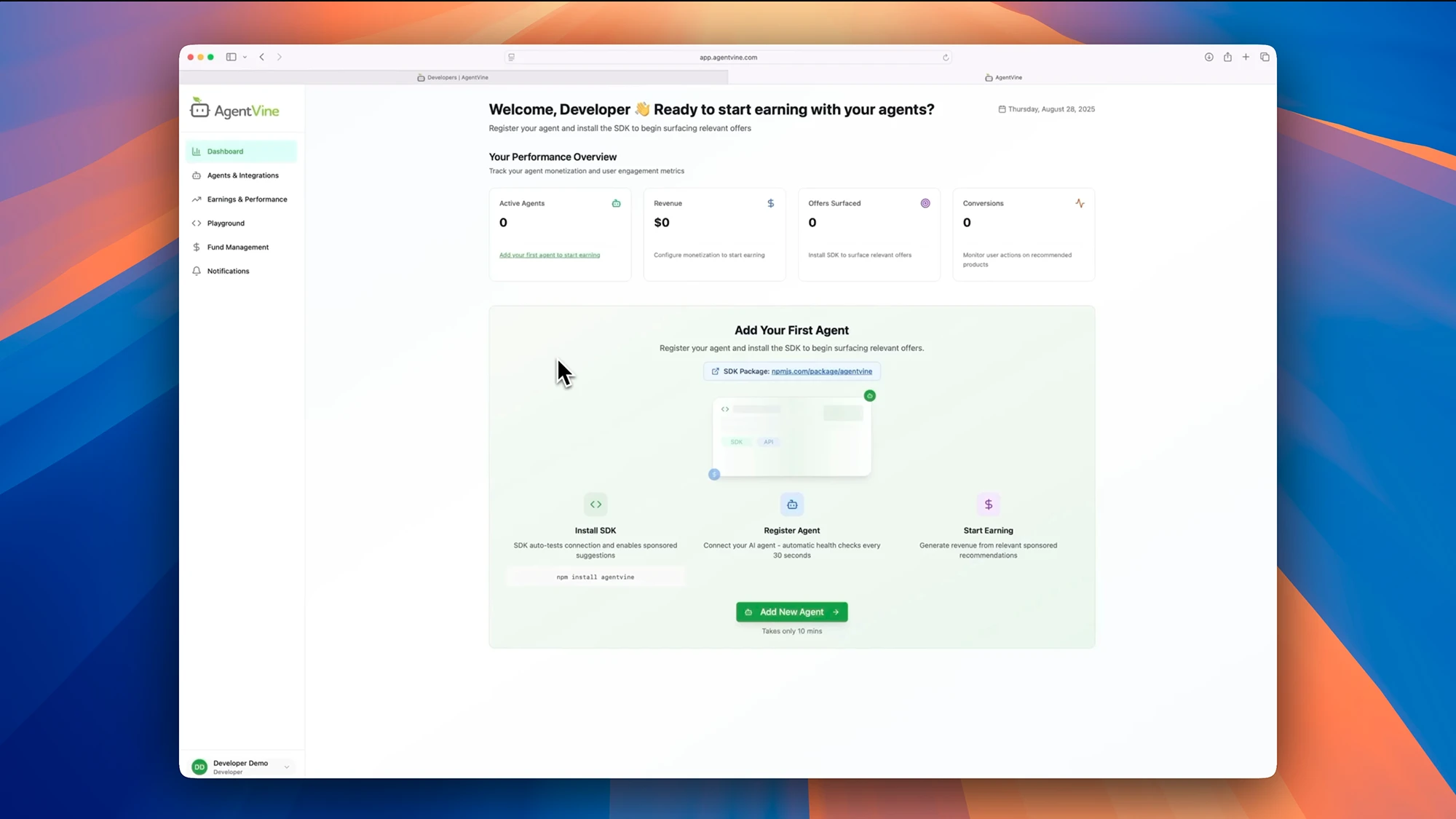
Walkthrough: How AgentVine Connects AI Agents and Advertisers
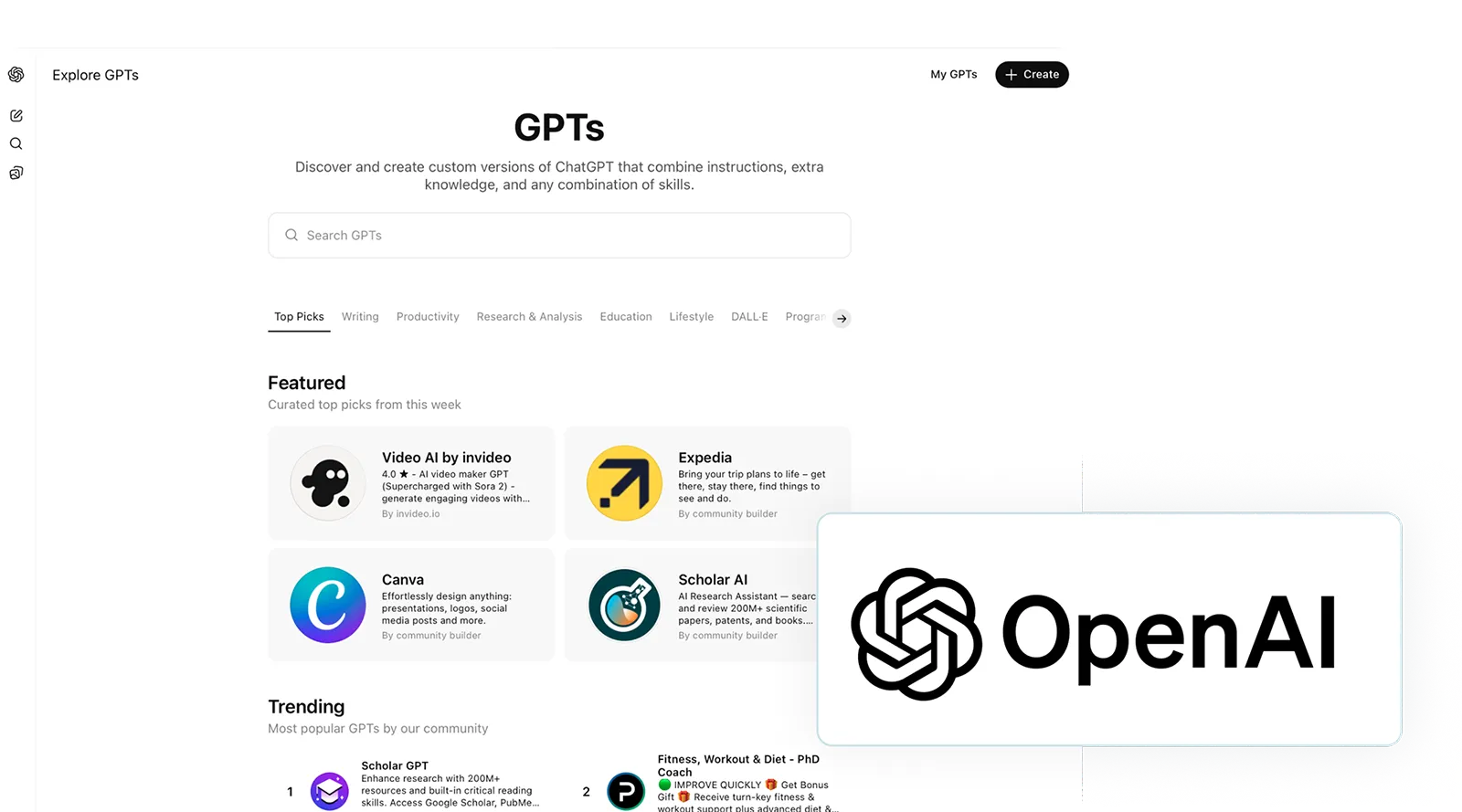
AgentVine works with OpenAI GPTs
You can now connect AgentVine to any custom GPT on the OpenAI platform. Just add your Agent ID and Secret Key, no extra hosting or setup required. It’s the fastest way to start monetizing decision flows in your GPT-based agents.
Privacy & Trust
No tracking. No profiling. No tricks.
Offers are opt-in, transparent, and surfaced only when relevant. Developers stay in control, users stay focused.
Why Now
Agents aren't just chatting, they're choosing.
With open ecosystems and tool access, Agent choices are programmable, and finally monetizable.
For Investors
This isn't a feature, it's infrastructure.
AgentVine is the first network that monetizes decision-making. It's composable, protocol-aware, and ready to scale with the agent economy.
Frequently asked questions
Feeling inquisitive? Have a read through some of our FAQs.
What is an Offer Unit?
A structured, intent-tagged product suggestion that agents can evaluate and include in their reasoning flow. Complete with payout terms, phrasing, and optional filters.
How do developers get paid?
When a user takes action on a sponsored suggestion (clicks, signs up, etc.), the advertiser pays, and the developer receives a revenue share — tracked and distributed by AgentVine.
Can I control when offers are shown?
Yes. Developers fully control when and where offers are queried, what categories are allowed, and how they're phrased or disclosed.
Will this make agents feel like ads?
No. AgentVine is designed to preserve trust — offers are surfaced only when contextually relevant, never forced, and always transparently marked.
What types of products can be advertised?
Anything that solves a real problem — tools, APIs, SaaS products, services — as long as it's useful, clear, and tied to an actionable intent.
Why hasn't this been done before?
Because agents weren't really agents until now, and closed ecosystems didn't allow this kind of logic-level integration. The timing and the tooling have finally aligned with less walled gardens and more public directories.
Newsletter
Subscribe to our newsletter
Do not miss the latest information about AgentVine, it's features and develpment.